2/9/2026 • 5 min read
85% of organizations experienced at least one data loss incident in 2024 (Proofpoint). In today's digital economy, where data is the lifeblood of business, losing it—or having it leaked—represents one of the biggest threats to your company’s longevity.
Whether it’s industrial espionage, cyberattacks, or human error, the consequences can be severe: GDPR fines, loss of intellectual property, and damaged customer trust. DLP (Data Loss Prevention) is no longer just a technological solution—it’s a strategic approach to safeguard your information assets.
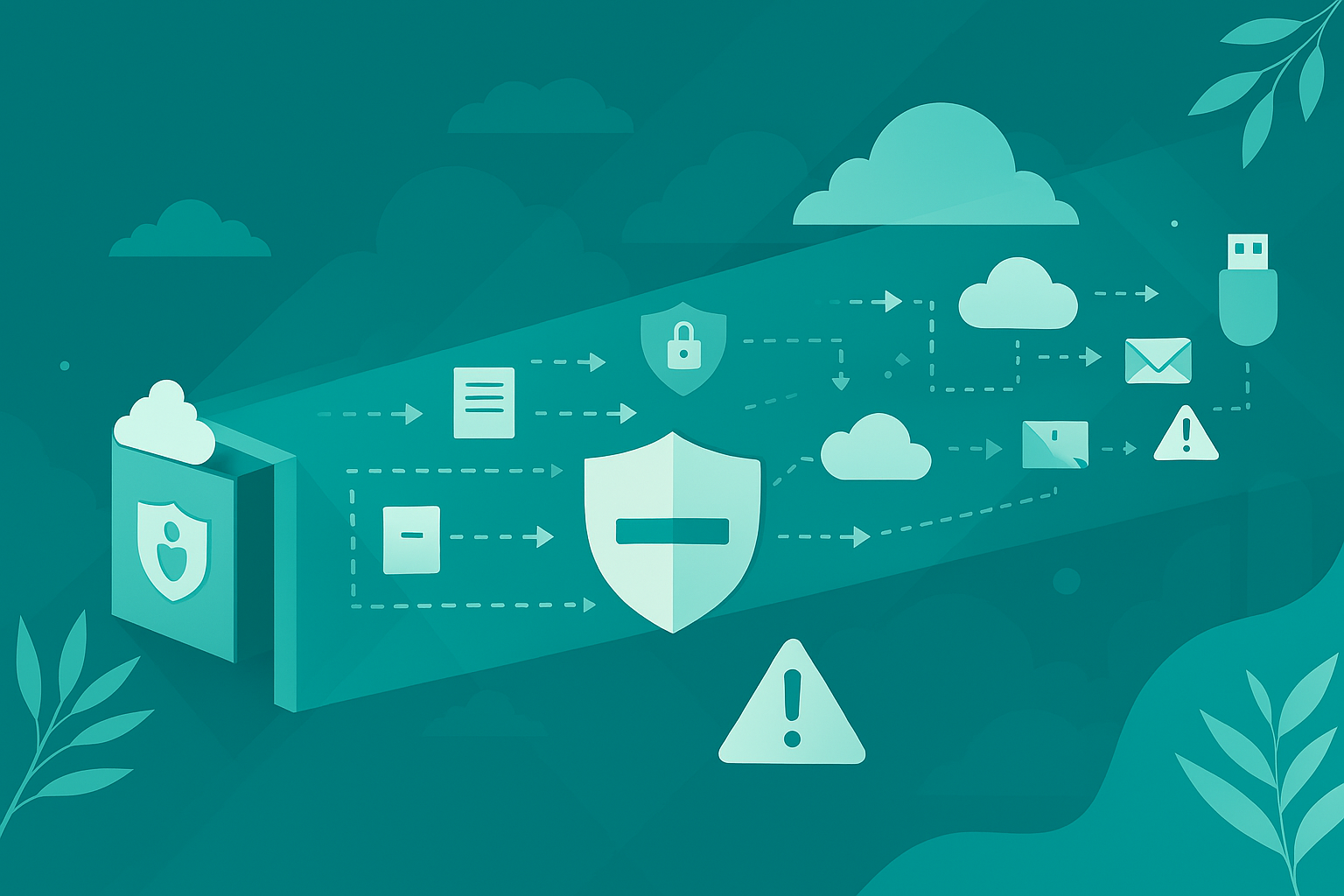
Data Loss Prevention is a set of strategies and tools designed to ensure that your sensitive information never leaves your organization’s secure perimeter without authorization.
An effective DLP strategy protects data in its three key states:
Secure data as it flows across your network (emails, instant messaging, web transfers, USB drives, copy-paste actions).
Protect stored assets on servers, databases, and cloud environments.
Control daily handling on workstations (printing, file editing through applications).
Key takeaway: DLP is a holistic strategy to safeguard sensitive information from leaks or loss. It covers all data—whether in transit, at rest, or in active use.
Protecting against data leaks requires continuous monitoring of multiple risk vectors:
Over 60% of data breaches originate internally (Verizon). This includes human error (sending confidential files to the wrong recipient) as well as malicious acts, such as employees leaving with client databases or trade secrets.
While cyberattacks (phishing, ransomware) directly target exfiltration, Shadow IT exacerbates the risk. Unapproved SaaS tools create blind spots where data moves freely without security oversight.
A high-performing data protection solution must provide complete, centralized visibility through key features:
· Automated Classification: Identify and classify data according to sensitivity (confidential, personal, public, etc.).
· Endpoint Protection: Lock down USB ports and monitor transfers to external devices.
· Cloud & Web Monitoring: Analyze files in real-time on platforms like Microsoft 365, Google Drive, or Dropbox.
· Smart Flow Filtering: Block the transmission of documents containing sensitive information (trade secrets, patents, health data).
Key takeaway: DLP is more than just a blocking tool—it’s an educational lever. By alerting users in real-time, it turns every employee into a cybersecurity ally.
To protect your sensitive data, Daspren combines continuous monitoring with seamless integration. Rather than imposing cumbersome processes, Daspren safeguards your information without slowing down your teams.
· Complete Data Visibility: Automated mapping identifies critical files (patents, client databases, strategic documents) and protects them according to internal and regulatory policies (GDPR, NIS2).
· Real-Time Control: Our solution analyzes data access in real-time, alerting and immediately blocking sensitive data from leaving your environment.
· Omnipresent Protection: Security policies apply consistently, whether data resides on a workstation, local server, or in the cloud.
Daspren focuses on active, continuous protection of your critical information without compromising performance or productivity.
With the rise of external threats and increasingly complex digital usage, implementing a Data Loss Prevention strategy is essential. It not only guards against attacks and exfiltration attempts but also strengthens data governance within the company.
Beyond technology, DLP plays a critical role in raising awareness among employees. By making risks visible and guiding usage, it engages every user in safeguarding sensitive information, turning data security into a shared responsibility.
To learn more about DLP, visit our dedicated page or contact us for a demo.